by David Lyons
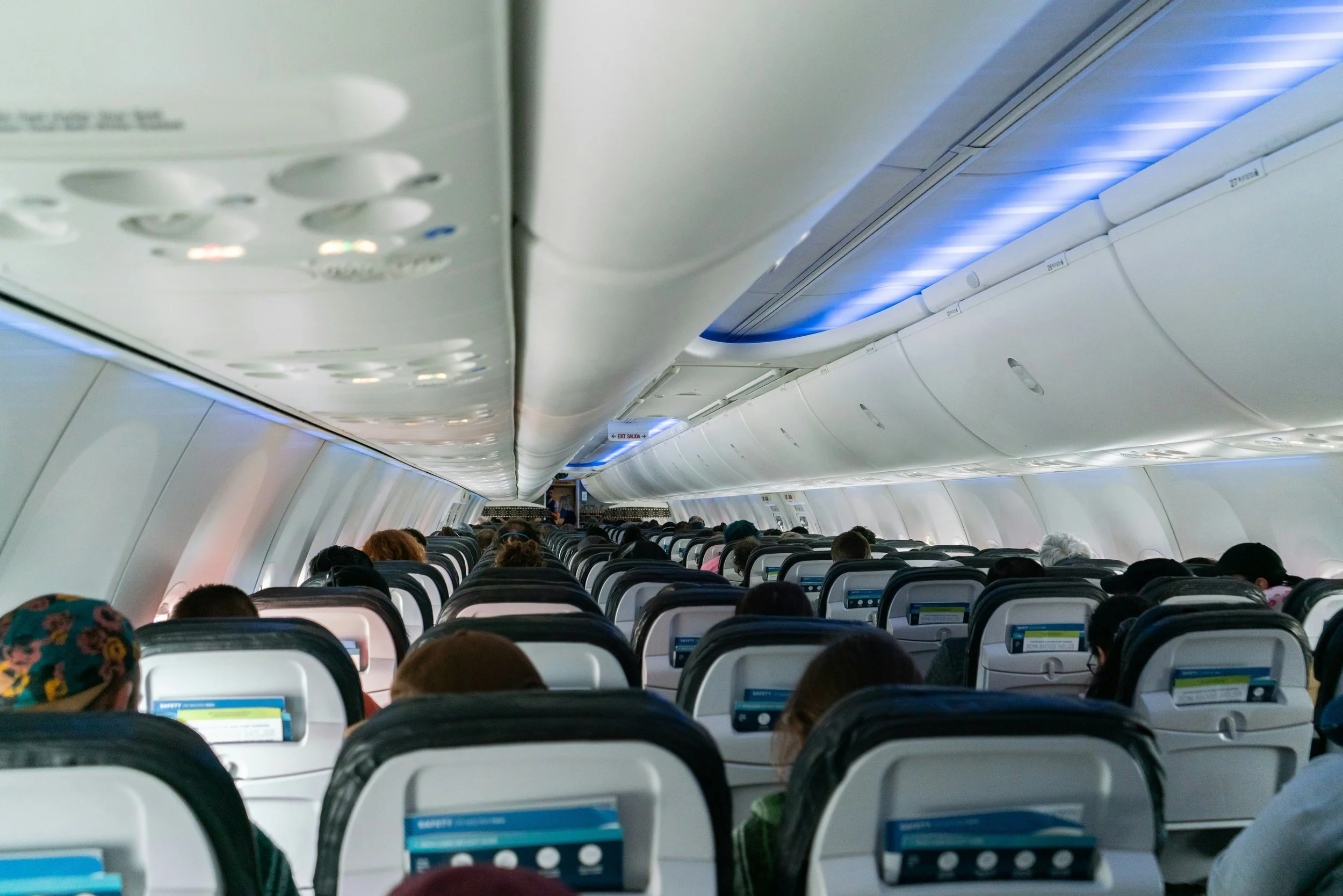
I was sitting in the middle seat on an overnight flight to the Middle East when I once again asked the Lord, “Why are we doing this? Is it worth it?” It was not the first time I’d brought this question to Him. Then I thought, “Well, at least I’m not spending the night swimming after a shipwreck like the Apostle Paul did.” I opened to 2 Corinthians 11:23-27 and felt silly complaining about my middle seat.
However, I do imagine that sometimes Paul asked whether it was worth it.
We tend to think that Paul’s ministry sphere was smaller than ours is. After all, he never left the Mediterranean region. But although I can generally fly to any ministry in our Navigators Worldwide Partnership in 24 hours or less it often took Paul and his team weeks of travel to travel 500 miles to make a ministry visit. And their travel was far more dangerous and expensive than ours is. But apparently they believed it was worth it. Why?
It was (and is) worth it for the flow of resources. Remember those collections for the believers in Jerusalem? Followers of Jesus in Corinth and Macedonia gave sacrificially and entrusted their financial resources to Paul’s team to deliver them faithfully to effectively address the need. It was like the Navigators of Africa sending a generous and sacrificial gift to help the Navigators in Latin America. Sometimes Paul was arranging the flow of human resources, sending fellow workers with gifting and experience needed in another country where the Gospel was growing. A prominent leader from another organization once described to a group of Navigator leaders how he sees us by saying how Navigators are those who will travel across the world to help one person. Yes, that is still worth it for the flow of resources to the frontiers where they are most needed.
It was (and is) worth it for the flow of learning. As the Gospel grows then the Body of Christ needs to grow with it to adapt to new situations and opportunities. Remember in Acts 11 where there was a controversial initiative taking place up in Antioch? The apostles sent Barnabas to investigate, and to learn. Then Barnabas sent for Paul. As that movement of the Gospel spread, eventually leaders from across Paul’s worldwide partnership convened in Jerusalem for an intense debate described in Acts 15. That flow of learning between Antioch, Jerusalem and other outposts of the growth of the Gospel paved the way for the rest of us who are not Jews to get in on what God was and is doing. What if the apostles had not sacrificed to make those connections for mutual learning? It turned out to be worth buying a ticket for Barnabas to visit Antioch.
It was (and is) worth it for the flow of relationships. I am fascinated by Romans 16 where Paul greeted 30 friends by name. Paul had never been to Rome. But he had deep friendships with dozens of friends there. How did that happen? Why was he greeting them as beloved friends and sacrificial co-workers? Paul was nurturing and sustaining their worldwide partnership because it was important.
The Navigators started out as a bunch of worldwide initiatives led by Dawson Trotman. It then grew into a worldwide organization led by Lorne Sanny. That degree of organizational control became cumbersome, like an exoskeleton that Jerry White led us to shed so that we could become what he called a global society. That release led to another surge of growth and creativity that eventually descended into what Donald McGilchrist affectionately called a beautiful chaos. Then 25 years ago Jerry convened 50 Navigator leaders to spend a week in Cyprus asking the Holy Spirit what He had in mind for us. Out of that was birthed the Core calling, values and vision around which Mike Treneer and others shaped the worldwide partnership that we enjoy today with thousands of staff and leaders in 120 countries. As a worldwide partnership we are not controlled or managed from the center (as was so in our worldwide organization) but we do embrace mutual commitments beyond merely being informally interconnected and interdependent (as was true in our global society).
Although I stepped off of the International Executive Team last fall, I spent much of my 20 years with that team nurturing international networks, learning communities and communities of practice to enable the flow of resources, mutual learning, and relationships among specialists across our worldwide partnership. These were comprised of groups of Navigators variously focused on missional enterprises, or responding to poverty, corruption and injustice, or student ministries, or church discipleship ministry, or growth of the Gospel among the major religions, or missions sending and receiving. Such learning communities are woven across our primary leadership structure where we are organized and led by geographical regional directors, country leaders, city leaders and local leaders.
But there is a vulnerability with arranging international flows of resources, learning and relationships. Anything that you try to do trans-regionally becomes more complex and expensive. So there are only a very few things that are worth organizing internationally, and most of those will only be periodic. So now the International Leadership Team is focusing more on growing trans-local flows within each region. Trans-regional flows are still needed for some things, but the litmus test is growth of those flows within each region and country. The idea is for all to work together like a body with many varied parts.
The ultimate test of effectiveness in anything we pursue as a worldwide partnership is whether it’s truly happening locally. I love seeing how the Gospel is growing on the geographic and conceptual frontiers of our work, and how it’s growing right here in our neighborhood in Colorado Springs. When I visit various geographic and functional parts of our worldwide partnership, I love seeing the grace of God and sharing what I’ve seen with others… as Barnabas did in Acts 11:22-26.
Why do we nurture such connections across our worldwide partnership? World why? Because it’s one of the ways of God and it’s worth it. It’s even worth hours cramped in the middle seat.
Take 3 minutes to watch these videos for a more vivid glimpse of the why of our worldwide partnership: